Astronomy Picture of the Day: 05/01/2026
- Katherine Miller

- Jan 5
- 3 min read
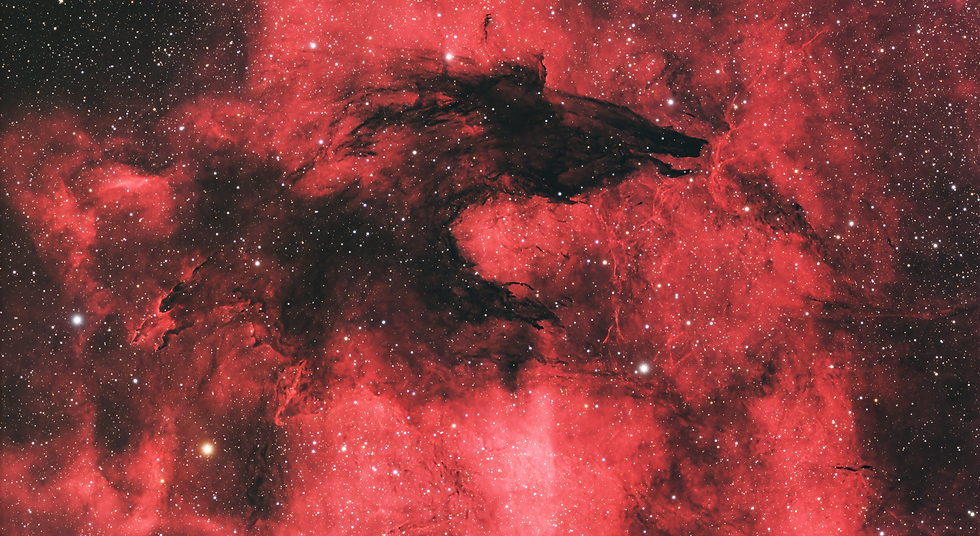
Object Name: Horsehead Nebula

Copyright: Miki Szollosi
Location: Walloon, QLD
Connect: @mikisastropics
Skill level: Intermediate (2-4 years)
Image Title
Flaming Horse
Artists' statement
A swirling stellar playground of hydrogen gas forms what appears to be a horse’s head, beside an erupting blaze of newborn stars.
How This Image Was Captured
Gear used
Skywatcher Esprit 80ED
Skywatcher HEQ5 Pro
ASI294mm
ASI120mm
Exposure details
5min subs HaRGB, 16 hours total.
Processing notes
Siril for stacking and calibrating frames. Pixinsight and Photoshop.
Exploring the Horsehead Nebula
The Horsehead Nebula (Barnard 33) is one of astronomy’s great optical illusions, instantly recognisable, yet wildly misunderstood.
Silhouetted against the glowing hydrogen backdrop of IC 434, the Horsehead isn’t an emission nebula at all. It’s a cold, dense pillar of molecular gas and dust, around 3–4 light-years tall, blocking the light behind it like cosmic negative space. If IC 434 weren’t there, the Horsehead would be almost completely invisible. It doesn’t shine — it steals the spotlight.
The physics behind the shape
That iconic horse profile isn’t accidental or stable. The structure is being actively eroded by ultraviolet radiation from nearby massive stars, primarily Sigma Orionis, a hot O-type star just off frame. This radiation photo-evaporates the outer layers of the cloud, sculpting the dense core into its familiar form. In astronomical terms, the Horsehead is temporary — models suggest it may fully disperse in a few million years, which is the blink of an eye on cosmic timescales.
What’s less commonly known is that the Horsehead contains knots of extremely cold gas, some just 10–20 Kelvin, where star formation should be possible — yet appears suppressed. Magnetic fields threading through the nebula may be providing additional pressure, slowing gravitational collapse. In other words, the Horsehead is fighting against becoming a stellar nursery.
The neighbourhood: far more than a horse
Just beyond the Horsehead lies NGC 2023, one of the brightest reflection nebulae in the sky. Unlike IC 434’s hydrogen glow, NGC 2023 shines by scattering blue light from a young B-type star at its centre. Embedded within it are PAHs (polycyclic aromatic hydrocarbons) — complex carbon-based molecules that fluoresce under UV light and are considered precursors to prebiotic chemistry. These molecules are rarely visible from Earth without narrowband imaging, yet they dominate the infrared structure of the region.
Above the Horsehead sits Flame Nebula (NGC 2024), often overlooked but astrophysically ferocious. It contains a dense cluster of newly formed stars still partially hidden by dust. Radio observations reveal ionised gas cavities and shock fronts, evidence of stellar winds carving their way out of the cloud. The dark lanes seen visually are not empty space, but thick curtains of dust laced with iron-rich grains.
A region in violent balance
The entire complex is part of the Orion Molecular Cloud Complex, one of the most studied star-forming regions in the Milky Way. What makes the Horsehead region special is the tension between creation and destruction: radiation that both triggers star formation in compressed regions and simultaneously tears nebulae apart.
Discovered photographically in 1888 by Williamina Fleming, the Horsehead wasn’t immediately recognised as significant. Its fame came much later, once astrophotography revealed just how dramatically dust can shape what we see — and what we don’t.
The Horsehead Nebula isn’t iconic because it’s beautiful. It’s iconic because it’s honest. It shows us that space isn’t empty, stars are born violently, and even the most familiar shapes in the sky are fleeting sculptures carved by light itself.
Behind the Selection
This image was chosen because it presents the Horsehead Nebula as part of a wider physical system, not just an isolated icon.
The frame balances the dark silhouette of Barnard 33 against the glowing hydrogen of IC 434, while also revealing nearby reflection and emission regions shaped by intense stellar radiation. Fine dust structure and subtle gradients are preserved, giving an honest view of how light, gas, and dust interact in this part of Orion.
It was selected for its ability to communicate both scientific context and visual clarity, encouraging the viewer to look beyond the familiar shape and understand the dynamic environment that formed it.


Comments